Scan to Eat: How QR Code Menus Speed Up Food & Drink Service at the World Cup
Published on July 2, 2026 · 6 min read
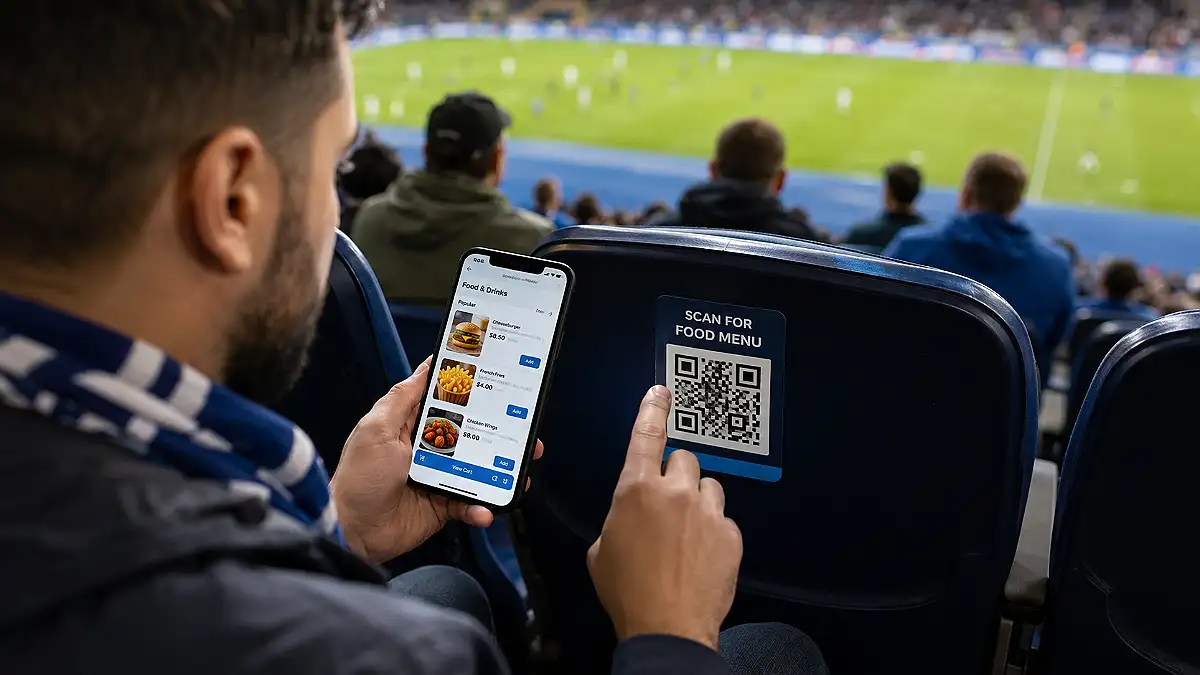
Feeding a small city's worth of people within a highly condensed timeframe is one of the most formidable logistical challenges of hosting a FIFA World Cup match. Tens of thousands of hungry, thirsty fans descend upon the stadium concourses simultaneously, expecting rapid service so they do not miss a second of the action on the pitch. Traditional methods of ordering—staring at static menu boards, yelling orders over the roar of the crowd, and waiting for food to be prepared—are fundamentally unsuited to the breakneck pace of a modern mega-event.
To solve this, stadium hospitality groups have embraced the digital revolution by deploying QR code menus across their venues. Originally popularized globally out of necessity during the pandemic, the QR menu has evolved into a highly sophisticated stadium hospitality tool. By placing QR codes on seatbacks, concourse pillars, and VIP tables, organizers have empowered fans to browse, order, and pay from the palm of their hands.
In this exploration, we look at how QR code menus are drastically reducing wait times, overcoming language barriers, and transforming the culinary experience for fans at the World Cup.
The Halftime Crunch: Why Traditional Menus Fail
The anatomy of stadium food service is unique. Unlike a traditional restaurant where covers are spaced out over hours, a World Cup stadium experiences massive, synchronized spikes in demand. The most notorious is the 15-minute halftime window.
When relying on traditional physical menu boards mounted above cash registers, a significant bottleneck occurs simply in the decision-making process. Fans wait in line for ten minutes, reach the front, and only then begin to decide what they want to eat, asking questions about ingredients or availability. This severely limits the number of customers a single register can process. QR code menus solve the 'decision bottleneck' by completely decoupling the browsing and ordering phase from the fulfillment phase.
Contactless Ordering in the Modern Era
By integrating QR code technology, stadiums allow fans to handle the entire front-end of the transaction independently. As a fan walks onto the concourse—or even while they are still sitting in their seat during the 40th minute of the match—they can scan a locally placed QR code using their smartphone camera.
This scan instantly directs them to a mobile-optimized web app showcasing the available food and beverage options for that specific concourse zone. Fans can browse high-quality images of the meals, customize their orders, and pay instantly via their digital wallet. The order is then transmitted directly to the kitchen display system (KDS). The fan only needs to approach the counter when their phone notifies them that their order is ready for pickup, transforming chaotic lines into calm, organized retrieval zones.
Multilingual Support for a Global Audience
One of the greatest, yet least discussed, advantages of QR code menus at an international event like the World Cup is the elimination of language barriers. A stadium in South America, Europe, or the Middle East will host fans speaking dozens of different languages on any given match day. Physical menus are usually printed in the host nation's language and perhaps English, leaving many fans struggling to order.
Digital menus accessed via QR code can automatically detect the default language of the user's smartphone operating system. When a fan from Brazil scans a QR menu in a German stadium, the digital interface instantly renders the menu, descriptions, and allergen information in Portuguese. This not only vastly improves the fan experience but also speeds up ordering by eliminating the need for complex, hand-gesture-filled interactions between fans and non-bilingual concession staff.
Dynamic Pricing and Real-Time Inventory Updates
Stadium kitchens operate on strict inventory limits. There is nothing more frustrating for a fan than waiting in line only to be told that the signature stadium burger is sold out. Physical menu boards cannot adapt to real-time kitchen realities.
QR code menus are directly linked to the venue's inventory management software. If the kitchen runs out of vegetarian wraps, that item is instantly removed from the digital menu or marked as 'Sold Out.' Furthermore, this connectivity allows for dynamic promotions. If organizers notice an overstock of a perishable item, such as cold sandwiches, near the end of the match, they can instantly push a discount code or lower the price on the digital menu to move inventory rapidly and reduce food waste.
In-Seat Delivery vs. Express Pick-Up
The implementation of QR codes allows stadiums to offer tiered service models.
Premium In-Seat Delivery
In hospitality suites and premium seating tiers, the QR code on the armrest contains specific metadata identifying the exact section, row, and seat number. When a VIP fan scans to order, they don't even need to input their location. Food runners receive the ticket with the precise seat coordinates and deliver the champagne and canapés directly to the fan, ensuring they never miss a moment of the match.
Express Pick-Up Lanes
For general admission, in-seat delivery is logistically impossible due to crowd density. Instead, the QR menu routes fans to dedicated 'Express Pick-Up' lanes at the nearest concession stand. Fans simply flash a digital receipt—often featuring a unique barcode generated upon payment—to the attendant, grab their freshly prepared food, and return to the game.
Conclusion
The integration of QR code menus has fundamentally upgraded the hospitality experience at the FIFA World Cup. By empowering fans to browse in their native language, order from their seats, and skip the massive halftime queues, stadiums are maximizing their revenue while minimizing fan frustration. The simple act of scanning to eat has proven to be an elegant, scalable solution to the complex problem of feeding 80,000 people simultaneously.
Whether you manage a massive sports venue, a bustling local pub, or a quiet café, digitizing your menu is a proven way to boost efficiency. You can easily link your digital menus to custom-designed codes using the QRinsec free QR generator.
Frequently Asked Questions (FAQ)
Do I need to download a specific app to use a stadium QR menu?
Generally, no. Most modern QR code menus at stadiums utilize native smartphone cameras to open a mobile web browser interface, removing the friction of downloading a dedicated app just to buy a hot dog.
How does the QR menu know which concession stand I am near?
The QR codes placed around the stadium are embedded with location-specific UTM parameters or unique URLs. Scanning a code in Sector A will show you the menu for the kitchens operating in Sector A.
Are digital QR menus accessible for visually impaired fans?
Yes, well-designed digital menus opened via QR code are fully compatible with smartphone screen readers (like VoiceOver or TalkBack), making them much more accessible than physical menu boards.
Can I pre-order food before the game using these codes?
In some advanced stadium setups, fans can scan a code provided on their digital ticket hours before kickoff to pre-order food, selecting a specific pickup time window to avoid rushes.
Ready to get started?
Want to streamline your own venue's ordering process? Check out our QR generator to digitize your menus.
Published by the QRinsec Editorial Team — practical documentation about QR codes, barcode standards, and QRinsec’s client-side tools. Content is reviewed against product testing and published technical documentation from sources such as GS1, Denso Wave, and ISO standards where applicable.
Have questions or corrections? Contact us.
Create your QR code for free
No sign up, no limits — generate and download in seconds.
Open the generator