How Animal Shelters Use QR Codes to Get Pets Adopted Faster
Published on July 3, 2026 · 5 min read
How Animal Shelters Use QR Codes to Get Pets Adopted Faster
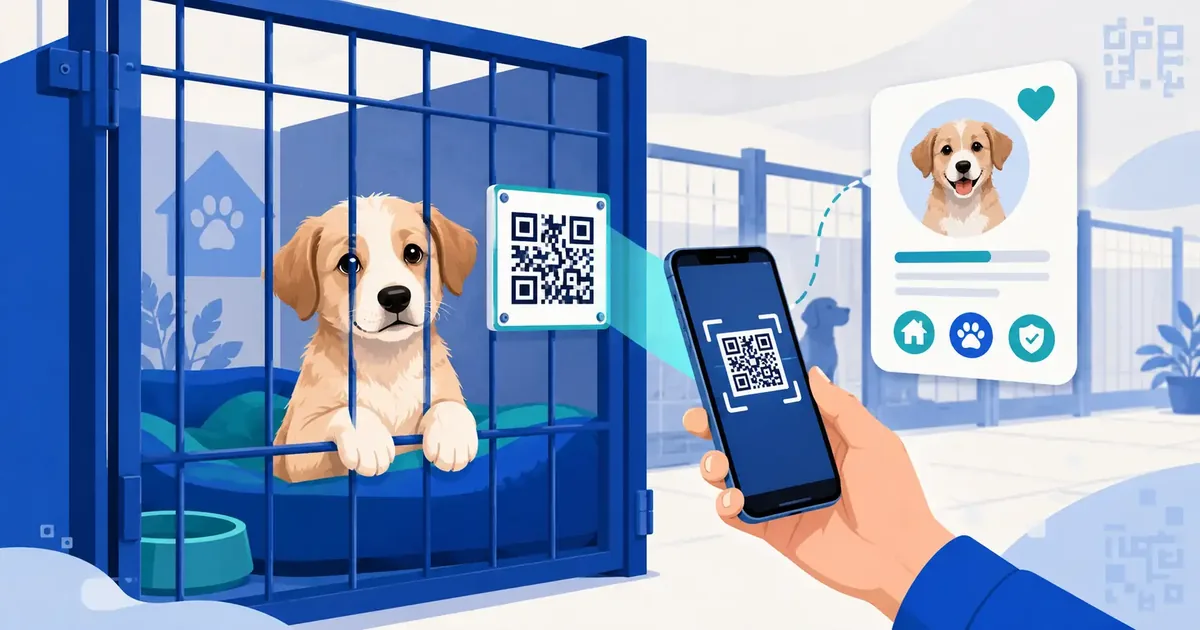
A family walks the kennel aisle on a Saturday, and a quiet brown dog watches them from the back of his run. The card clipped to his gate says his name is Buster and not much else. They move on. What they never learn is that Buster is house-trained, great with kids, and only shy for his first day. A QR code on that card would have told them in one scan, and Buster might have gone home.
That gap between a scared dog and the family that would love him is exactly what a QR code helps close. Shelters are busy, understaffed places, and a small card can't hold everything a good match needs to know. A scan can.
Why the Kennel Card Falls Short
A printed kennel card is stuck with whatever fit on it the morning it was written. It usually shows a name, a rough age, and a breed guess. It can't show the dog playing, can't explain that he pulls on the leash but settles fast, and can't be updated when he finishes his medical treatment and becomes available.
Adopters fill that silence with assumptions. A dog cowering at the back looks "aggressive" when he's really just overwhelmed. A card that says nothing gets read as a warning. Meanwhile the staff who know this dog is a gem are across the building, cleaning runs and answering phones. The information exists. It just isn't where the adopter is standing.
What Sits Behind an Adoption QR Code
The code on the kennel card points to that specific animal's profile page, one the shelter controls and updates in seconds. Suddenly the same little card opens into everything a thoughtful adopter wants.
A strong profile page usually includes:
- A short video of the dog walking, playing, or greeting a volunteer.
- An honest temperament note: good with kids, needs a cat-free home, still learning leash manners.
- Medical status and whether he's neutered, vaccinated, and ready to go.
- His story, kept warm but truthful.
- A direct link to start an adoption application.
Because the details live on a page and not on the card, staff update a dog's status the moment it changes. The card by the gate never has to be reprinted, and it's never out of date.
Static or Dynamic? Dynamic Wins Here
This matters more in a shelter than almost anywhere. A static code bakes its destination in forever, which is useless when animals cycle through constantly. A dynamic code points to a link the shelter can repoint, so one printed card can serve one dog today and be reassigned to another next month.
That flexibility saves money and hassle. Print a batch of durable cards once, and reuse them as animals come and go, updating the link each time. You can generate those cards with the Dog QR Tag or Cat QR Tag tool. If you want the full picture, the guide on static vs dynamic QR codes lays it out plainly. For a shelter, dynamic isn't just better, it's the only version that fits the workflow.
A Saturday That Ends in an Adoption
Back to that quiet brown dog. Picture the same family, but now the card has a bold QR code and a line: "Scan to meet Buster." The dad scans it out of curiosity. Up comes a fifteen-second clip of Buster wagging and leaning into a volunteer's hand, plus a note that he's calm in a home and loves kids.
The whole read of the dog flips. He's not scary, he's shy, and the video proves it. They ask to meet him in a quiet room, he melts, and they start an application from the same page before they leave. The shelter didn't add staff or hours. It just put Buster's real self one scan away from the people standing at his gate.
Handling Medical and Behavior Notes Carefully
Honesty helps adoptions last, but some details need a careful touch. A public profile should be truthful without being alarming or exposing sensitive intake history.
Keep the public page focused on what helps a match: temperament, energy level, and the kind of home that fits. Frame challenges as needs, not flaws, so "reactive to other dogs" becomes "would thrive as the only dog." Deeper medical or behavioral records can sit behind a staff login for the adoption counselor, while the scanner at the gate sees only the adopter-friendly version. The ASPCA offers solid guidance on responsible adoption and matching that's worth building your profiles around (aspca.org), and Best Friends Animal Society shares practical resources shelters use to boost adoptions (bestfriends.org).
Done right, the code makes the shelter more transparent, not less, because the truth is finally where adopters can reach it.
Building Cards That Survive a Shelter
A kennel is a rough place for paper: hosed down daily, chewed, and splashed. A flimsy card fails fast and quietly. Build for it.
- Use waterproof, wipeable cards in a sturdy holder on the gate.
- Print the code large and high-contrast so it scans through a kennel door.
- Add a short prompt like "Scan to watch me play" to earn more scans.
- Keep a plain animal ID on the card as a backup.
- Re-scan cards weekly during cleaning to catch any that have worn out.
The same idea extends beyond the kennel. A shelter can put codes on its adoption events, its foster paperwork, and even the collars pets go home with, much like a QR pet tag that keeps new adopters reachable. If a pet is ever lost after adoption, a QR lost-pet poster becomes the natural next tool.
Seeing What Actually Works
One quiet advantage: dynamic codes can show how often each profile gets scanned. Over a few weeks a shelter learns which animals get overlooked and which photos and videos pull people in. That's real feedback, not guesswork.
A dog who sits unscanned for two weeks might need a better photo, a new video, or a featured spot near the entrance. The data turns a gut feeling into a plan, and for animals whose time matters, a small improvement in visibility can be the difference between going home and being missed.
Frequently Asked Questions
Do adopters need an app to scan the kennel cards? No. Modern phone cameras read QR codes automatically. An adopter just points, taps the link, and the profile opens, with nothing to install.
Isn't this expensive for a shelter on a tight budget? Generating codes is free, and dynamic cards can be reused across animals for years. The main costs are durable cards and someone to keep the profiles current, both modest.
Can we reuse a card when an animal is adopted? Yes, if the code is dynamic. You simply repoint the link to the next animal, so one printed card serves many pets over its life.
What stops sensitive intake details from going public? Keep the public profile to adopter-friendly basics and put full medical or behavioral history behind a staff login. The scanner at the gate sees only what helps a match.
Give Every Animal a Voice at the Gate
Shelter animals don't get to make their own case, and a tiny printed card can't make it for them. A QR code can, opening a video, an honest profile, and an application from the exact spot where an adopter is deciding. Set it up once and every future animal benefits. You can build your first adoption profile codes for free with the Dog QR Tag and Cat QR Tag tools and help the quiet dog at the back of the kennel finally get seen.
Published by the QRinsec Editorial Team — practical documentation about QR codes, barcode standards, and QRinsec’s client-side tools. Content is reviewed against product testing and published technical documentation from sources such as GS1, Denso Wave, and ISO standards where applicable.
Have questions or corrections? Contact us.
Create your QR code for free
No sign up, no limits — generate and download in seconds.
Open the generator