How Aquariums Use QR Codes to Turn Tanks Into Interactive Exhibits
Published on July 3, 2026 · 5 min read
How Aquariums Use QR Codes to Turn Tanks Into Interactive Exhibits
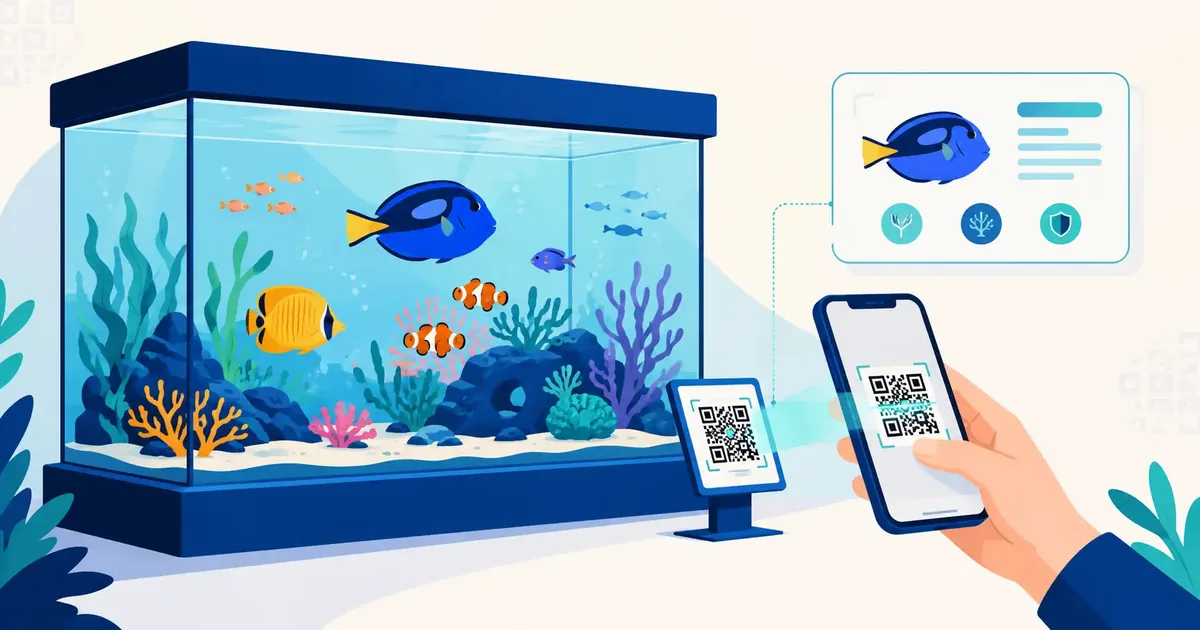
A visitor stands in the blue glow of a reef tank, watching a fish change color, and wonders what on earth it's doing. The little label says the species name and not much else. Then she spots a QR code, scans it, and a short clip explains that the fish is signaling to a rival, right as she watches it happen.
That's the magic aquariums are chasing. Water is a hard place to display information, and tank labels are cramped and easily missed. A QR code moves the depth off the glass and onto the phone already in the visitor's hand.
The Trouble With Tank Labels
Aquarium signage fights a losing battle. The lighting is dim, the surfaces get splashed, and a tank might hold a dozen species that all need explaining. Cram that onto one small placard and visitors' eyes glaze over. Leave things off and the exhibit feels thin.
There's also the pace problem. Some visitors want a name and move on. Others would happily watch a ten-minute documentary about a single seahorse. A fixed label can't stretch to both. A scan lets each person choose how deep to go, without cluttering the glass for everyone else.
What an Aquarium QR Code Unlocks
The code beside the tank points to a page the aquarium controls and refreshes whenever it likes. That page can hold what no label ever could.
A strong tank page usually offers:
- A short video of the species behaving naturally, feeding, hunting, or displaying.
- Clear facts on habitat, diet, and conservation status.
- Today's feeding or dive-show times.
- An explanation of odd behavior visitors are likely watching right then.
- A one-tap way to support the aquarium's conservation work.
Because the content lives on a page, staff update feeding times daily and swap in new footage without touching a single sign. This is the same flexible setup that powers zoo exhibit codes, applied to the harder, wetter world of tanks.
A Visit That Comes Alive
Picture a school group moving through the aquarium. At the jellyfish tank, half the kids scan and watch a clip showing how the creatures pulse and drift, then read why they have no brain or heart. It sticks because they saw it, not just read it.
At the shark tank, a teacher scans and finds the day's feeding time, then reroutes the group to catch it live. The exhibit just delivered a highlight it never could have with a static sign. Same tanks, richer visit, and not one extra placard on the glass.
The Conservation Message
Aquariums carry a serious mission under the entertainment: most exist to educate the public about ocean health and to fund conservation. A QR code is a natural bridge to that message.
A tank page can explain how overfishing or warming water threatens a species, then offer a concrete way to help, whether that's a donation or a simple change in seafood choices. Linking to trusted resources makes the message credible. The Association of Zoos and Aquariums sets standards for education and conservation that shape strong exhibits (aza.org), and Seafood Watch gives visitors practical, sourced guidance on sustainable choices they can act on (seafoodwatch.org).
When someone changes what they order for dinner because of a sign at a fish tank, the exhibit did its real job.
Building Codes That Survive Humidity
An aquarium is warm, damp, and splashed constantly. A code that peels or fogs is a dead end nobody reports. Build for the wet.
Here's what holds up:
- Sealed, waterproof materials. Laminated or acrylic-mounted codes resist splashes and condensation.
- High contrast for low light. Dim, blue-lit halls make weak codes hard to scan, so keep them bold.
- Dynamic codes. You'll change feeding times and videos often, so keep the link editable.
- A short prompt. "Scan to watch her hunt" earns far more taps than a bare code.
- Placement at multiple heights. Include a lower code for children and wheelchair users.
Check each code after installation and re-scan periodically, since humidity is tough on adhesives and print.
The Same Idea at Home
This isn't only for big institutions. Home aquarists use the same trick on a smaller scale, linking a code by the tank to a care and feeding schedule so any helper can keep the fish healthy while they travel. If that's you, our guide to an aquarium care QR schedule shows how to set one up. The principle is identical: put the knowledge one scan away from the glass.
Designing the Page Behind the Tank
The code is easy. The page is where an aquarium wins or loses the visitor's attention, so it pays to design it with the setting in mind.
Lead with video, always. Someone standing at a dim tank wants to see the animal do something, not read three paragraphs first. A short, silent-friendly clip that plays without fuss earns the most attention, since aquariums are loud and few people turn their sound on.
Keep the text skimmable. Break the facts into short chunks with clear headers, so a curious ten-year-old and a patient adult both find their level quickly. Nobody reads a dense block while standing in a crowd.
Answer the obvious question first. If visitors always ask why the octopus changes color, put that at the top. The best pages predict the exact question the tank provokes and answer it before the visitor even finishes wondering.
Make the conservation ask gentle but present. One clear, honest line about a real threat, plus one concrete action, does more than a guilt-laden speech. People act on hope and clarity, not shame.
And design for thumbs, not desktops. Big tap targets, fast loading over crowded venue wifi, and no tiny menus. A page that loads slowly at the tank is a page nobody sees. Test it on a real phone, in the actual hall, before you print a single code.
Frequently Asked Questions
Do visitors need an app to scan tank codes? No. Modern phone cameras read QR codes automatically. Visitors point, tap the link, and the page opens, with nothing to download.
Will the codes survive constant splashing and humidity? They will if you use sealed, waterproof materials and check them regularly. Standard paper labels won't last, but laminated or acrylic-mounted codes hold up well.
Can a small aquarium or fish store afford this? Yes. Generating codes is free, and the main costs are durable printing and keeping the pages current. It works just as well for one tank as for a hundred.
How do we know which exhibits get the most scans? Dynamic codes can report scan counts, so you can see which tanks draw the most curiosity and improve the pages that get overlooked.
Turn Every Tank Into a Story
A label names a fish. A QR code shows it hunting, explains what it's doing, and connects a moment of wonder to the ocean it came from. Whether you run a public aquarium or a single tank at home, you can start with one code and grow. Build your first tank code for free with the QRinsec generator and let your visitors dive as deep as their curiosity takes them.
Published by the QRinsec Editorial Team — practical documentation about QR codes, barcode standards, and QRinsec’s client-side tools. Content is reviewed against product testing and published technical documentation from sources such as GS1, Denso Wave, and ISO standards where applicable.
Have questions or corrections? Contact us.
Create your QR code for free
No sign up, no limits — generate and download in seconds.
Open the generator