How QR Code Tickets Transformed Stadium Entry at the World Cup
Published on July 2, 2026 · 6 min read
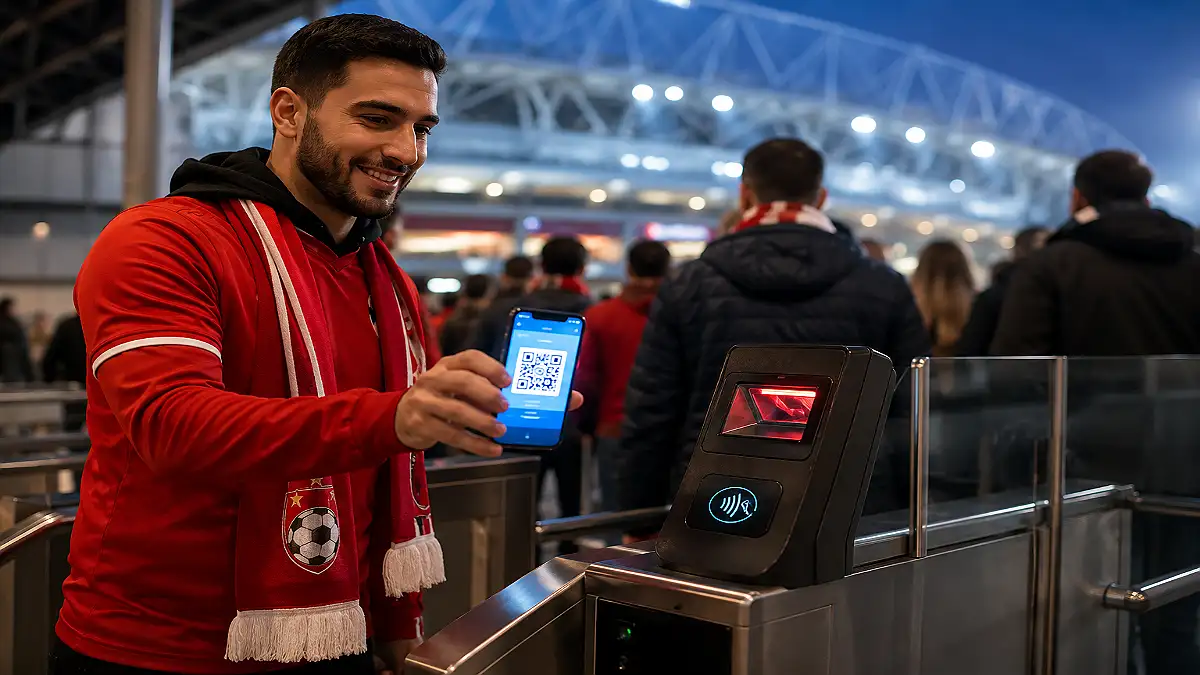
In July 2026, as 82,000 fans simultaneously descend on MetLife Stadium for the World Cup Final, the sheer volume of humanity makes physical ticket checks impossible. The era of clutching a paper stub is dead. Today, venue security relies entirely on dynamic QR code ticketing to process up to 800 fans per minute through a single gate.
This shift isn't just about speed—it's a critical weapon against a multi-million-dollar scalping industry. By encoding encrypted, rotating data into a scannable format, organizers can instantly invalidate counterfeit tickets and lock tickets to a specific fan's device.
In this deep dive, we explore how QR code tickets have transformed stadium entry at the World Cup, the underlying technology that makes it possible to scan 80,000 fans in a matter of hours, and why this digital shift represents the permanent future of mega-event ticketing.
The Evolution of World Cup Ticketing
The transition from paper to pixels didn't happen overnight. Early attempts at modernizing stadium entry involved standard 1D barcodes printed on heavy cardstock. While this allowed for basic automated turnstile entry, it did little to prevent fraud; a barcode could easily be photocopied. As smartphone penetration reached critical mass globally, FIFA and local organizing committees recognized an opportunity to move the entire ticketing ecosystem onto mobile devices.
The introduction of mobile ticketing apps marked a turning point. Instead of receiving a physical ticket in the mail months in advance, fans could now receive a secure, encrypted digital asset directly to their smartphone. The visual representation of this asset—the key that actually unlocked the stadium turnstile—was the QR code. This shift not only saved millions of dollars in printing and courier costs but also allowed for real-time ticket management, enabling features like official ticket transfers and resale platforms.
How QR Code Ticketing Works at Mega-Events
At a basic level, a QR (Quick Response) code ticket functions by storing a unique, encrypted alphanumeric string that corresponds to a specific seat, match, and user profile in the tournament's central database. When a fan approaches the stadium, they present the QR code on their smartphone screen to a specialized optical scanner mounted on the turnstile.
These scanners are designed for high-throughput environments. Unlike a standard smartphone camera, stadium scanners use advanced imaging technology to read QR codes instantly, even under difficult lighting conditions, such as glaring midday sun or the stark artificial lights of a night match. The scanner captures the QR code, decrypts the token, pings the local stadium server (or operates off a pre-downloaded, synchronized local database to ensure offline capability), validates the ticket's authenticity, and triggers the physical release of the turnstile—all in a fraction of a second.
Security Upgrades: Fighting Fraud and Scalping
The Power of Dynamic QR Codes
The most significant advantage of modern QR code ticketing is the implementation of 'dynamic' or 'rotating' QR codes. A major flaw of early digital tickets was that a user could simply take a screenshot of the QR code and text it to multiple people, or sell the same screenshot to several unsuspecting buyers. Dynamic QR codes completely neutralize this threat.
In a dynamic QR ticketing system, the QR code displayed on the user's screen is not static. Instead, the ticketing app generates a new QR code every 15 to 60 seconds. This is achieved using a time-based one-time password (TOTP) algorithm, similar to the technology used in two-factor authentication apps. If a scalper takes a screenshot of the ticket, that image becomes completely useless within a minute. Turnstile scanners are synchronized with the server's clock and will only accept the currently active QR code.
Identity Binding and Bluetooth Integration
At recent World Cups, the QR code ticket has been tightly bound to the fan's digital identity (such as the Hayya Card used in Qatar). The ticket is activated only when the fan is in proximity to the stadium, sometimes utilizing Bluetooth beacons to verify location. Furthermore, the QR code generation often requires the fan's device to be the exact device registered to their account, preventing unauthorized mass transfers. This level of security ensures that the person entering the stadium is the legitimate ticket holder, drastically reducing black-market ticket sales and enhancing overall stadium security.
The Speed of Scanning: Moving Millions Through Turnstiles
When managing a crowd of 60,000 to 80,000 eager fans, bottlenecks at the entrance are a massive safety hazard. The speed of validation is critical. QR code scanners used at World Cup stadiums are optimized for rapid, continuous scanning. Fans are instructed to have their screens bright and their tickets open as they approach.
Because the turnstile hardware relies on robust 2D barcode imagers, fans do not need to perfectly align their phones. The omnidirectional scanning capability of modern readers means the QR code can be read upside down or at an angle. Furthermore, modern stadium infrastructure utilizes localized edge computing. Instead of sending every ticket scan to a remote cloud server—which could cause delays if the network lags—the turnstiles query a highly synchronized local server installed within the stadium. This ensures that the validation process takes less than fractions of a second per fan, allowing a steady, rapid flow of foot traffic.
Case Study: The Digital Ticketing Revolution in Qatar 2022
The 2022 FIFA World Cup in Qatar served as the ultimate proving ground for a fully digitized ticketing ecosystem. For the first time, paper tickets were virtually eliminated for the general public. Fans were required to download the official ticketing app, which housed their match tickets as dynamic QR codes.
This system proved invaluable when managing the unprecedented density of the tournament. With all eight stadiums located within a tight radius, fans could potentially attend multiple matches in a single day. The dynamic QR code system allowed organizers to track stadium occupancy in real-time. If a fan's QR code was scanned at Stadium A, the system knew they were inside. If someone tried to scan a duplicated ticket at Stadium B simultaneously, the system instantly flagged the anomaly. The success of the Qatar 2022 rollout solidified QR codes as the gold standard for global sporting events.
Beyond Entry: The Post-Scan Experience
The utility of the QR code ticket does not end once the fan passes the turnstile. Inside the stadium, the digital ticket continues to serve as a vital tool. Ushers use handheld QR scanners to verify seat assignments, ensuring fans are in the correct blocks and preventing aisle congestion.
Furthermore, the data generated by these QR scans provides invaluable insights for tournament organizers. By analyzing the exact times fans scan into the stadium, organizers can optimize staff deployment, adjust security queue layouts, and manage public transport schedules. If data shows that a large influx of fans enter through the North Gate within 30 minutes of kickoff, resources can be dynamically reallocated to handle the surge.
Conclusion
The introduction of QR code tickets has permanently altered the landscape of the FIFA World Cup. By eliminating the vulnerabilities of paper tickets and embracing the security of dynamic, digital assets, organizers have made stadium entry faster, safer, and infinitely more manageable. As technology continues to evolve, the reliable, scannable QR code remains the indispensable key to the beautiful game.
Whether you are organizing a local community tournament or managing entry for an exclusive VIP event, reliable digital entry is crucial. You can create your own secure, trackable access codes using the QRinsec free QR code generator today.
Frequently Asked Questions (FAQ)
What happens if my phone dies before I can scan my QR code ticket?
World Cup stadiums are equipped with dedicated ticket resolution centers. Staff can look up your registration details (using your passport or digital ID) and print a temporary barcode pass or charge your device enough to display the ticket.
Why can't I just use a screenshot of my World Cup ticket?
To prevent fraud and scalping, World Cup tickets use dynamic QR codes. The pattern changes every few seconds. A screenshot captures a static image that will expire and be rejected by the turnstile scanner.
Do I need an internet connection to scan my QR code at the gate?
Generally, no. Official ticketing apps are designed to work offline on match day. The dynamic QR code generation is handled locally on your device via a secure token downloaded previously when you had connectivity.
Are QR code tickets safer than paper tickets?
Yes. QR code tickets are tied to individual user accounts and digital IDs, making them incredibly difficult to steal, counterfeit, or resell on the black market compared to traditional paper tickets.
Ready to get started?
Ready to secure your own event ticketing? Use our free QR code generator to create dynamic codes today.
Published by the QRinsec Editorial Team — practical documentation about QR codes, barcode standards, and QRinsec’s client-side tools. Content is reviewed against product testing and published technical documentation from sources such as GS1, Denso Wave, and ISO standards where applicable.
Have questions or corrections? Contact us.
Create your QR code for free
No sign up, no limits — generate and download in seconds.
Open the generator