QR Code Tags vs Microchips: Which Actually Gets Your Pet Home?
Published on July 3, 2026 · 5 min read
QR Code Tags vs Microchips: Which Actually Gets Your Pet Home?
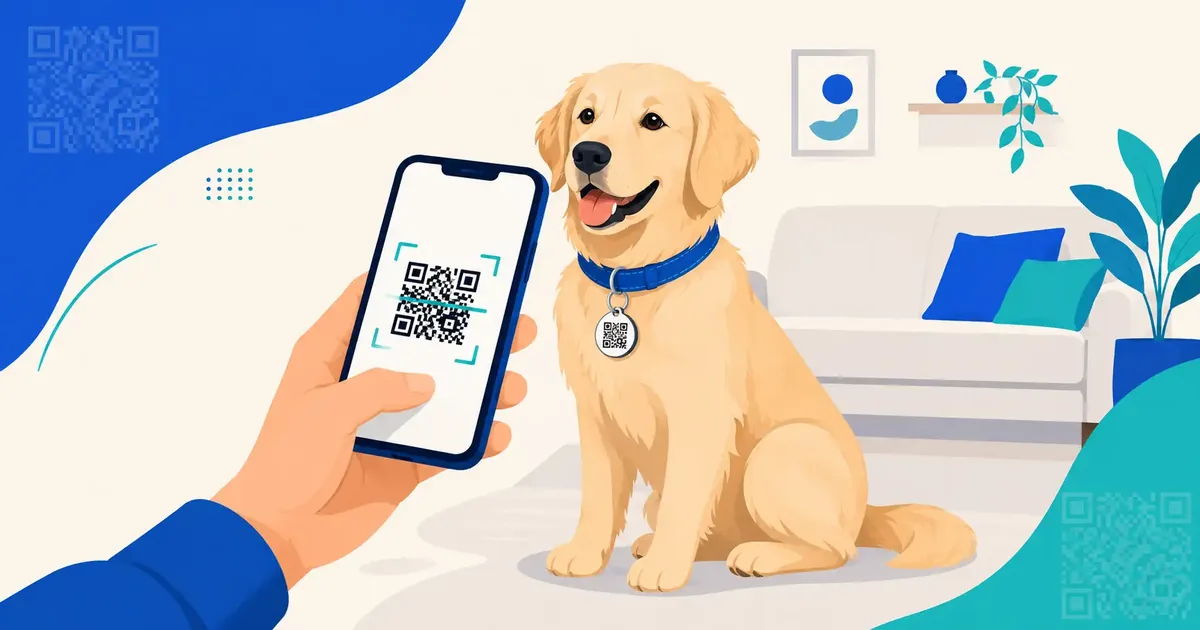
Your dog slips out the front gate, and a neighbor two streets over catches him an hour later. What happens next depends entirely on how you set up his identification. If he has a QR tag, she scans it on the spot and calls you. If he only has a microchip, she has to get him to a vet or shelter to be scanned. Both can bring him home. They just work in very different ways, and most owners misunderstand the difference.
So let's settle it honestly. This isn't about one beating the other. It's about knowing what each does well, where each fails, and why the smart move is usually both.
How Each One Actually Works
They solve the same problem from opposite ends, and the mechanics explain everything that follows.
A microchip is a tiny implant placed under your pet's skin, usually between the shoulder blades. It stores a unique number. When a vet or shelter passes a special scanner over it, that number comes up, and they look it up in a registry to find your contact details, assuming your registration is current.
A QR tag hangs on the collar. Anyone with a phone can scan it, and it opens a page you control with your contact info and whatever else you choose to share. No special scanner, no registry lookup, no vet visit required.
One lives in the pet and needs professional equipment. The other lives on the collar and works with the device in everyone's pocket. That single distinction drives all their strengths and weaknesses.
Who Can Read Each, and How Fast
Speed and reach are where the two really diverge.
A QR tag can be read immediately by the very person who finds your pet, a neighbor, a jogger, a kid at the park. They scan, they see your number, they call. Minutes, not hours. But it only works while the collar is on. Collars slip off, especially on cats, and a tag can't be read if it's gone.
A microchip can't be read by a passerby at all. It needs a vet or shelter with a scanner. That means a delay while someone transports your pet somewhere equipped. But it's permanent. It doesn't fall off, fade, or get removed, so it works even when the collar is long gone.
Fast but removable versus slow but permanent. Neither is strictly better, which is the whole point.
A Side-by-Side Comparison
| Feature | QR code tag | Microchip |
|---|---|---|
| Who can read it | Anyone with a phone | Vet or shelter with a scanner |
| Speed to reach you | Immediate, on the spot | After a trip to a vet or shelter |
| Stays with the pet | Only while the collar is on | Permanent, under the skin |
| Information shown | A page you control and update freely | A number linked to a registry |
| Updating your details | Edit the page anytime yourself | Update the registry, if you remember |
| Extra info possible | Photos, medical notes, messages | Just the ID number |
| Cost | Low, generate the code for free | Implant fee plus registry |
Read the table and the conclusion writes itself: their weaknesses are opposite, so together they cover nearly every scenario.
The Update Problem Nobody Mentions
Here's a failure both share, and it sinks more reunions than any technical flaw: outdated information.
A microchip is useless if the registry still has your old phone number. Plenty of chipped pets never get home because the owner moved and never updated the registry. A QR tag has the same risk if you don't keep the page current, but it has a real advantage, you can update it yourself, instantly, from your phone, for free, as often as you like. No registry, no fee, no forgotten login. That ease means the QR page is far more likely to actually be current when it matters. The dynamic code is what makes that effortless updating possible.
Why the Answer Is Usually Both
Given opposite strengths, layering them is the honest recommendation, and it's what the experts advise.
Use the QR tag for speed. When your dog is found with his collar on, the finder reaches you in minutes without leaving the sidewalk. Use the microchip for the worst case, when the collar is gone and your pet ends up at a shelter, the permanent chip is the backstop that still identifies him. The American Veterinary Medical Association strongly supports microchipping as a permanent safeguard (avma.org), and the American Kennel Club offers practical guidance on combining identification methods (akc.org).
A collar tag and a chip together, both kept current, bring pets home far more reliably than either alone. Add a QR lost-pet poster if your pet does go missing, and you've covered speed, permanence, and reach.
Setting Up the QR Side Well
The microchip is a job for your vet. The QR tag you can build yourself in an afternoon, and doing it well matters.
- Create a clean recovery page with your name, two phone numbers, and a photo.
- Generate a dynamic code with the Dog QR Tag or Cat QR Tag tool so you can update details forever without a new tag.
- Print it on a durable metal or enamel tag, at least an inch wide.
- Add a plain phone number on the tag as a backup for anyone who can't scan.
- Test it on two phones before clipping it to the collar.
For the full walkthrough, the guide on QR pet tags goes deeper. The key is to keep both the tag's page and the chip's registry current, since neither helps with the wrong number attached.
Frequently Asked Questions
Is a QR tag a replacement for a microchip? No, and it shouldn't be. They cover opposite weaknesses. The tag is fast but removable; the chip is permanent but needs a scanner. Use both for the best chance of a reunion.
Can a stranger misuse the info on my QR tag? Only if you over-share. Keep the page to your contact details and a friendly note, and leave off your home address. You control exactly what a scanner sees.
Do microchips have GPS tracking? No. A standard microchip stores an ID number and has no location tracking. It only helps once someone scans your pet at a vet or shelter and looks up the registry.
Which should I set up first if I can only do one now? Either is better than nothing, but the QR tag is instant and free to start, while a microchip needs a vet visit. Ideally, add the chip soon after so you're covered both ways.
Cover Both Bases and Sleep Easier
The QR-versus-microchip debate has a boring, honest answer: get both. The tag brings your pet home fast when the collar's on, and the chip is the permanent safety net when it isn't. Keep both records current and you've done nearly everything possible to guarantee a reunion. You can build the QR side for free right now with the Dog QR Tag or Cat QR Tag tool and book the microchip at your next vet visit.
Published by the QRinsec Editorial Team — practical documentation about QR codes, barcode standards, and QRinsec’s client-side tools. Content is reviewed against product testing and published technical documentation from sources such as GS1, Denso Wave, and ISO standards where applicable.
Have questions or corrections? Contact us.
Create your QR code for free
No sign up, no limits — generate and download in seconds.
Open the generator