A Complete Guide to Barcodes for Inventory Management
Published on June 2, 2026 · 7 min read

Managing stock accurately is the lifeblood of any retail, manufacturing, or logistics business. Relying on manual data entry and visual counts is not only incredibly slow but inherently prone to human error. To achieve operational efficiency, businesses of all sizes rely on barcodes for inventory management. These simple optical labels transform the tedious task of stock control into a fast, automated, and highly accurate process.
The Core Benefits
Implementing a barcode system fundamentally changes how a warehouse operates. The primary benefits include:
- Elimination of Human Error: Manual data entry has a high error rate. Scanning a barcode is nearly 100% accurate, ensuring your stock levels reflect reality.
- Real-Time Tracking: When an item is scanned upon receiving, moving, or shipping, your central inventory database is updated instantly.
- Faster Training: Training new employees to use a scanner is significantly faster than teaching them a complex manual filing or typing system.
Choosing the Right Barcode Type
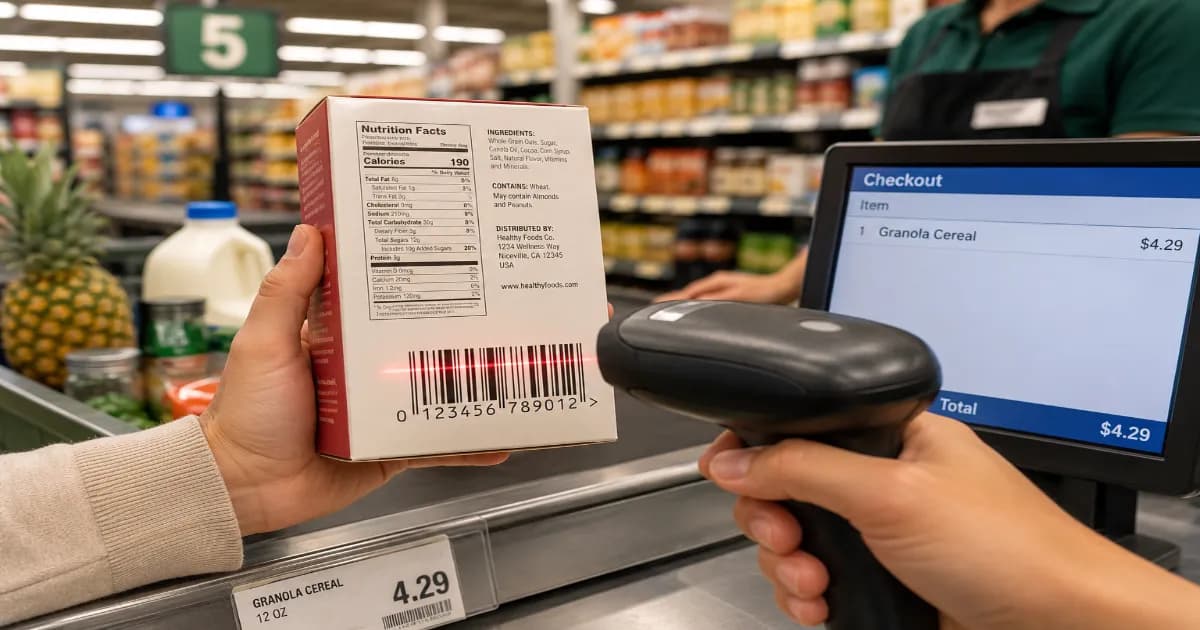
Not all barcodes are created equal. When setting up your inventory system, you must choose the symbology that best fits your needs. For retail products sold at the point of sale, you will likely need standard retail codes. Read our breakdown of the EAN vs UPC barcode to understand which standard applies to your region, as governed by GS1.
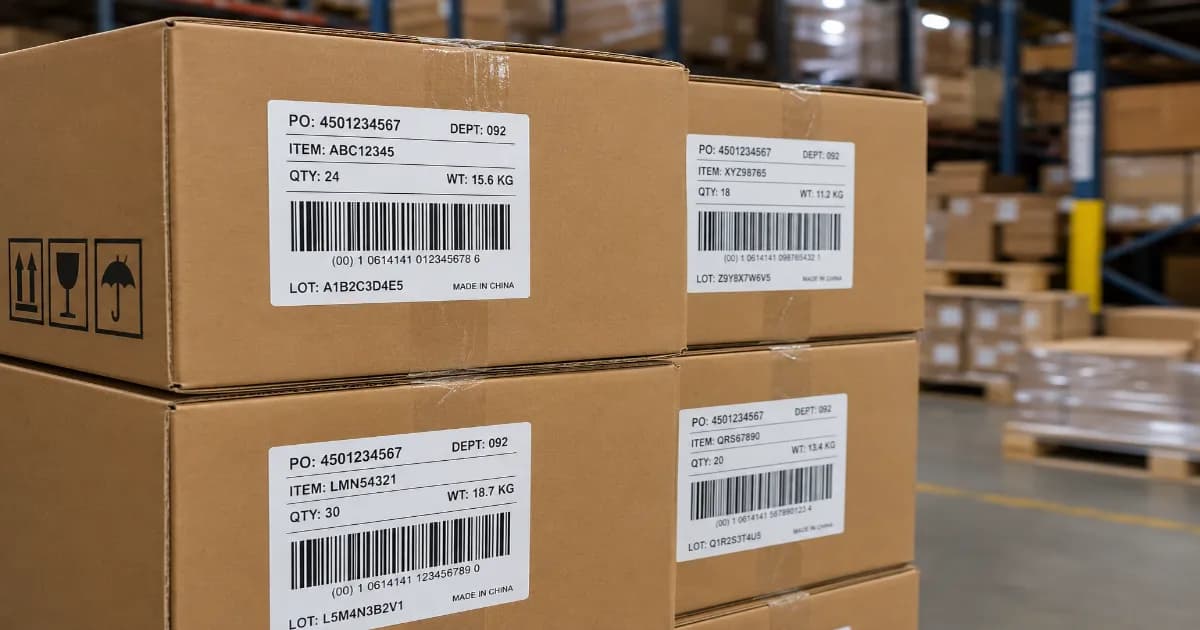
For internal tracking, warehousing, and logistics, you need codes that can hold alphanumeric data, such as serial numbers or batch codes. In these scenarios, you should explore the differences between the Code 128 vs Code 39 formats, which are industry standards for internal operations.
1D vs 2D Codes in Warehousing
While traditional 1D linear barcodes are the most common, 2D matrix codes are gaining traction in complex supply chains. 2D codes can hold significantly more data in a much smaller physical space. If you are dealing with tiny electronic components or need to encode extensive lot and expiry data, understanding the QR code vs barcode debate is essential for future-proofing your operations.
Setting Up Your System
Transitioning to an automated system requires three basic components:
- Software: An Inventory Management System (IMS) that acts as your central database.
- Hardware: Scanners or mobile computers to read the labels in the field.
- Generators and Printers: A reliable tool to generate the specific codes you need for your labels.
Start Tracking Accurately
Don't let manual errors cost you money through lost stock or unfulfilled orders. Taking the step to automate your warehouse is an investment that pays for itself rapidly. Create your QR code now or generate your linear inventory barcodes with our free tools to begin optimizing your supply chain today.
Create your QR code for free
No sign up, no limits — generate and download in seconds.
Open the generator