The Connected Fan: How QR Codes Guide Travel, Transport & Navigation in a World Cup Host City
نُشِر في 30 يونيو 2026 · 6 دقائق قراءة
When a city hosts a FIFA World Cup, it undergoes a radical, temporary transformation. Normal urban rhythms are upended as hundreds of thousands of international visitors flood the streets, hotels, and transit systems. For the traveling fan, navigating a foreign city—often with language barriers, unfamiliar public transport networks, and massive crowds—can be an overwhelming experience.
To ensure the host city doesn't buckle under the pressure and fans enjoy a seamless journey from the airport to the stadium, organizers have turned to the smartphone. At the core of this digital infrastructure is the strategic deployment of QR codes. Acting as a universal digital compass, QR codes have been seamlessly woven into the fabric of host cities, bridging the gap between physical environments and vital digital information.
In this final article, we explore how the 'Connected Fan' utilizes QR technology to navigate transit systems, validate their digital identity, and explore host cities with unprecedented ease.
The Challenge of Host City Navigation
During a mega-event, traditional wayfinding signage is often insufficient. Printed maps become obsolete the moment road closures are updated, and static signs cannot provide real-time crowd density warnings. Furthermore, fans must juggle multiple credentials: visas, hotel bookings, match tickets, and transport passes.
The goal of modern tournament organizers is to consolidate this fragmented experience. By utilizing QR codes, physical touchpoints across the city can become dynamic information portals. A single scan can direct a fan to a live transit map, alert them to a delay on a specific train line, or guide them to the safest walking route toward a Fan Festival.
Integrated Digital IDs: The 'Hayya Card' Model
The 2022 World Cup in Qatar set a new standard for fan mobility with the mandatory implementation of the 'Hayya Card'. This digital ID app was a masterclass in unified credentialing, and it relied heavily on a central, scannable QR code.
The Hayya Card QR code was an all-in-one passport for the fan. It acted as an entry visa to the country itself, the verification needed to book accommodation, the digital ticket to access the stadiums, and the pass required to ride public transportation for free. Instead of carrying physical documents, fans simply presented their secure, dynamic Hayya QR code at immigration counters, metro turnstiles, and stadium gates. This single point of scannable truth revolutionized international event travel, ensuring border control and local police could authenticate visitors instantly.
Smart Metro Systems and QR Transit Passes
Moving 80,000 people to a stadium requires a massive, coordinated effort by public transport networks. Host cities heavily incentivize the use of metro trains and dedicated shuttle buses to prevent gridlock.
To facilitate fast boarding, modern transport networks have integrated QR code readers directly into their transit turnstiles. Fans who downloaded the official tournament app were granted a digital transit pass—rendered as a QR code—valid for match days. When hundreds of fans bottleneck at a metro station post-match, the speed of QR scanning is crucial. Modern transit scanners process a QR code in a fraction of a second, allowing crowds to flow continuously through the gates without fumbling for paper tickets or physical transit cards. The data from these scans also allows transit authorities to monitor passenger loads in real-time, dispatching extra trains to stations showing heavy scan volumes.
Navigating the Last Mile: Stadium Precincts and Fan Zones
The 'last mile'—the walk from the transit station to the stadium seat—is notoriously difficult to manage. Stadium precincts are massive, labyrinthine security zones.
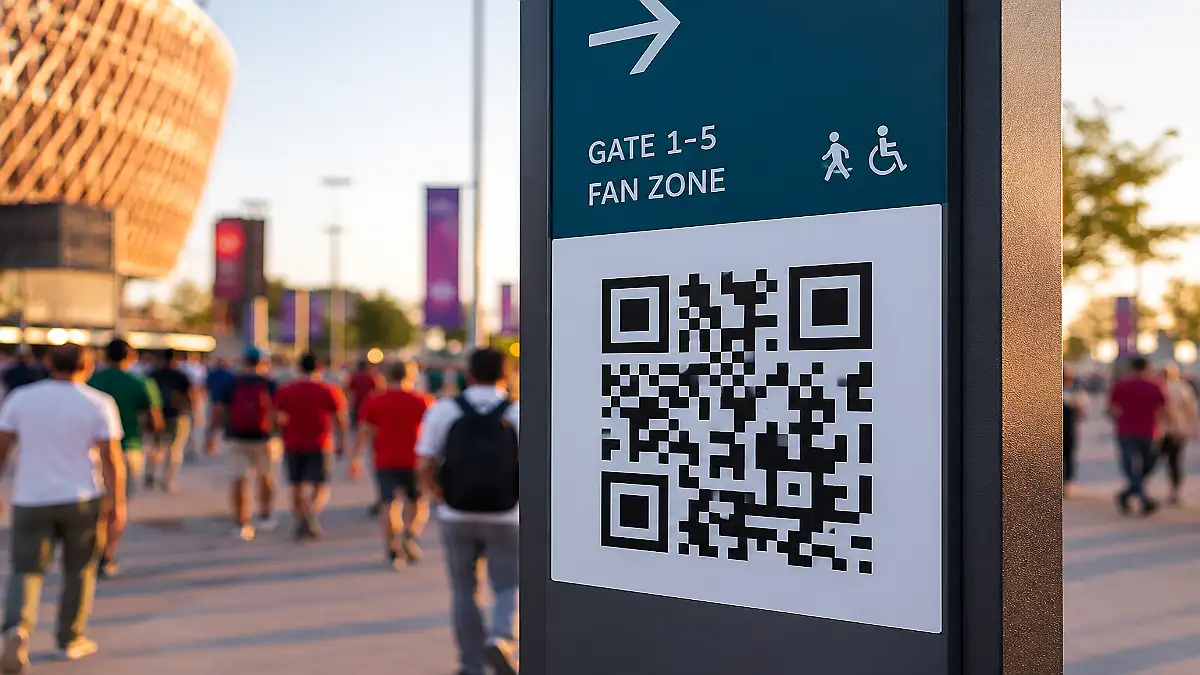
To assist fans, organizers place large, highly visible QR codes on signposts, barricades, and concourse walls. Scanning these 'You Are Here' codes launches a mobile web browser featuring an interactive map. This map can guide the fan precisely to their designated entrance gate based on their ticket block, show them the location of the nearest medical tent, or direct them to restrooms. Because these maps are web-based, organizers can update them dynamically; if a specific path becomes too crowded, the map can update routing instructions to redirect scanning fans to a less congested route.
Tourism and Cultural Exploration via QR Guides
The World Cup is not just about the matches; it is a massive tourism opportunity for the host nation. However, providing guided tours for hundreds of thousands of people simultaneously is impossible.
Host cities install QR codes at historical monuments, museums, and prominent cultural sites. When traveling fans explore the city on rest days, they can scan these codes to instantly access multimedia audio guides, historical articles, and promotional videos in their native language. This enriches the cultural experience of the tournament, turning the entire host city into a massive, interactive, self-guided museum powered by simple smartphone scans.
Conclusion
The integration of QR codes into the urban landscape has fundamentally changed how fans experience the FIFA World Cup. By turning a smartphone into a unified travel document, transit pass, and dynamic city guide, organizers have drastically reduced the friction of international travel. The QR code has become the silent, reliable companion for the connected fan, ensuring they spend less time worrying about getting lost and more time celebrating the global game.
Connecting the physical world to digital guides is a powerful tool for any business, campus, or local event. You can create your own dynamic routing links, digital maps, and informational tags using the QRinsec free QR generator.
Frequently Asked Questions (FAQ)
How did the digital ID/Hayya Card work for transit?
The digital ID app generated a specific QR code that acted as a universal transit pass. Metro turnstiles and bus boarding systems were equipped with optical scanners that validated the QR code to grant free travel on match days.
What if I have no mobile data while walking around the host city?
Official digital transit passes and ID QR codes are generally designed to generate and function offline. For dynamic maps, host cities usually deploy extensive free Wi-Fi networks around stadiums and fan zones.
Can I scan navigation QR codes with my regular phone camera?
Yes, modern iOS and Android smartphones have QR code scanning capabilities built directly into their native camera apps. No third-party scanning app is required.
Are digital QR transit passes faster than tap-to-pay NFC cards?
While NFC is extremely fast, QR transit scanners have been heavily optimized for speed. QR codes offer the advantage of not requiring physical card distribution to millions of foreign tourists, making them the superior choice for temporary mega-events.