Cashless Stadiums: How QR & Barcode Payments Power Buying at the World Cup
نُشِر في 30 يونيو 2026 · 6 دقائق قراءة
Picture the scene: It is halftime at the FIFA World Cup final. The referee blows the whistle, and instantly, 80,000 fans surge out of their seats, all with the exact same goal—to buy a drink, grab a snack, or purchase a commemorative scarf, and make it back to their seats before the second half begins. In the past, this 15-minute window was a chaotic nightmare of fumbling for correct change, dealing with unfamiliar foreign currencies, and painfully slow transaction times that left thousands of fans frustrated and empty-handed.
Today, the modern World Cup stadium has engineered a frictionless commerce environment, largely driven by the implementation of cashless infrastructure. At the heart of this financial revolution are QR codes and barcode payment systems. By turning every smartphone into a digital wallet and every concession stand into a rapid-scanning point of sale, tournament organizers have virtually eliminated cash from the matchday experience.
In this article, we examine the mechanics of cashless stadiums, how QR code payments function flawlessly under immense pressure, and why 'scan to pay' has become the financial backbone of the World Cup.
The Shift to Cashless at Global Sporting Events
The move toward cashless operations at mega-events is driven by two primary factors: speed and security. Handling physical cash requires enormous logistical effort. Armored trucks, secure counting rooms, and constant till-balancing slow down operations and introduce significant security risks. For international events like the World Cup, the problem is compounded by currency exchange issues, as fans arrive from dozens of different countries.
By transitioning to a fully digital payment ecosystem, stadiums can process transactions up to three times faster than traditional cash exchanges. QR codes have emerged as a globally understood, highly accessible payment bridge. Unlike NFC (Near Field Communication), which requires specific hardware integrated into the phone and the payment terminal, QR codes are hardware-agnostic. Any device with a camera and a screen can participate in a QR-based transaction, making it the most inclusive cashless option for a diverse global audience.
How QR Code Payments Function Under Pressure
There are two primary methods by which QR code payments are executed at World Cup concession stands: Consumer-Presented and Merchant-Presented.
Consumer-Presented QR Codes
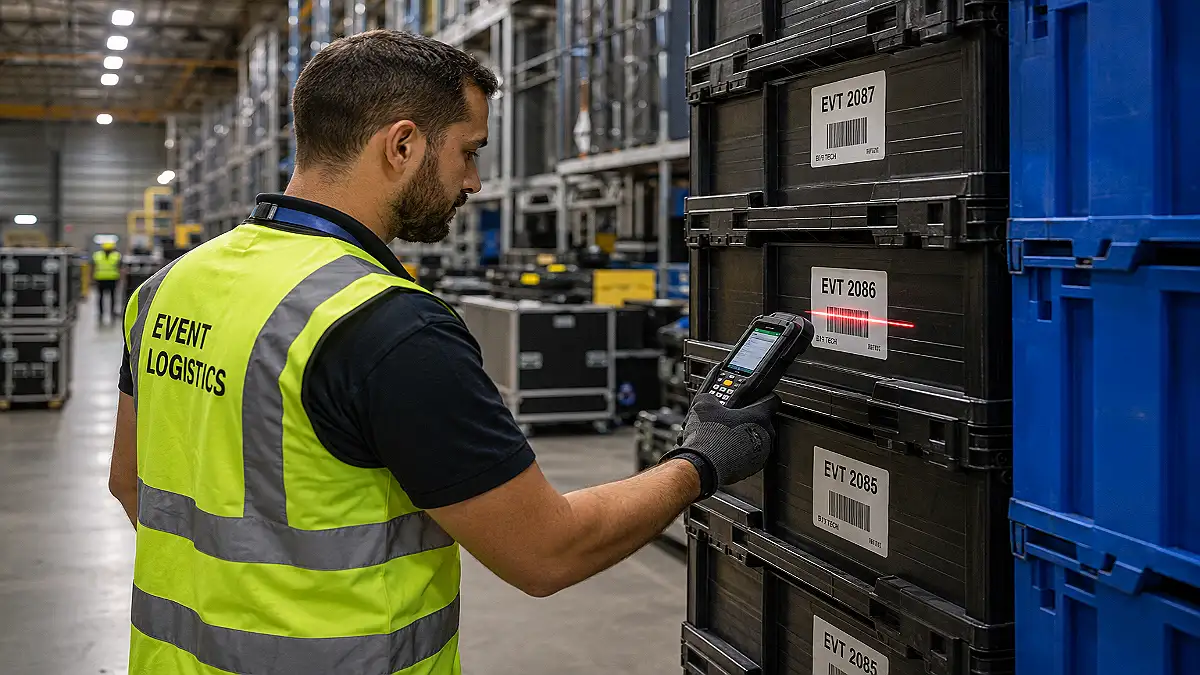
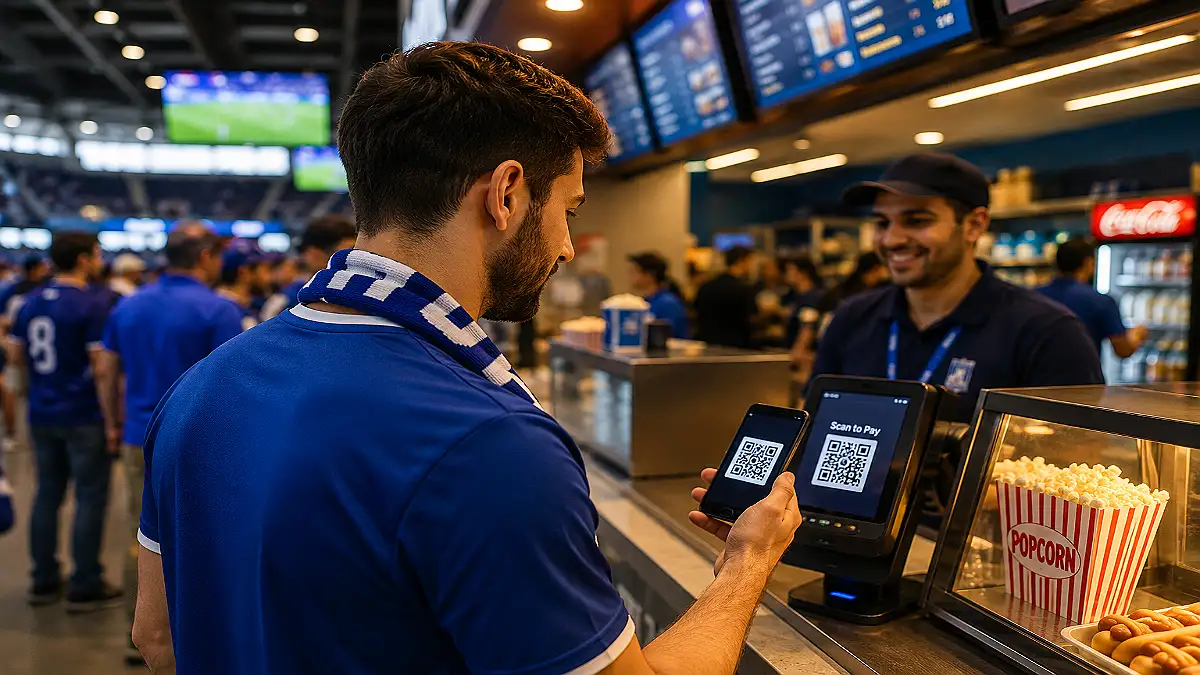
In this model, the fan opens their digital wallet or the official tournament app, which generates a unique, single-use payment QR code or barcode on their screen. The vendor uses a handheld scanner or a fixed barcode reader at the register to scan the fan's screen. The point-of-sale (POS) system instantly deducts the total amount from the user's linked account. This method is incredibly fast and operates well even if the fan has a weak internet connection, as the POS system handles the communication with the payment gateway.
Merchant-Presented QR Codes
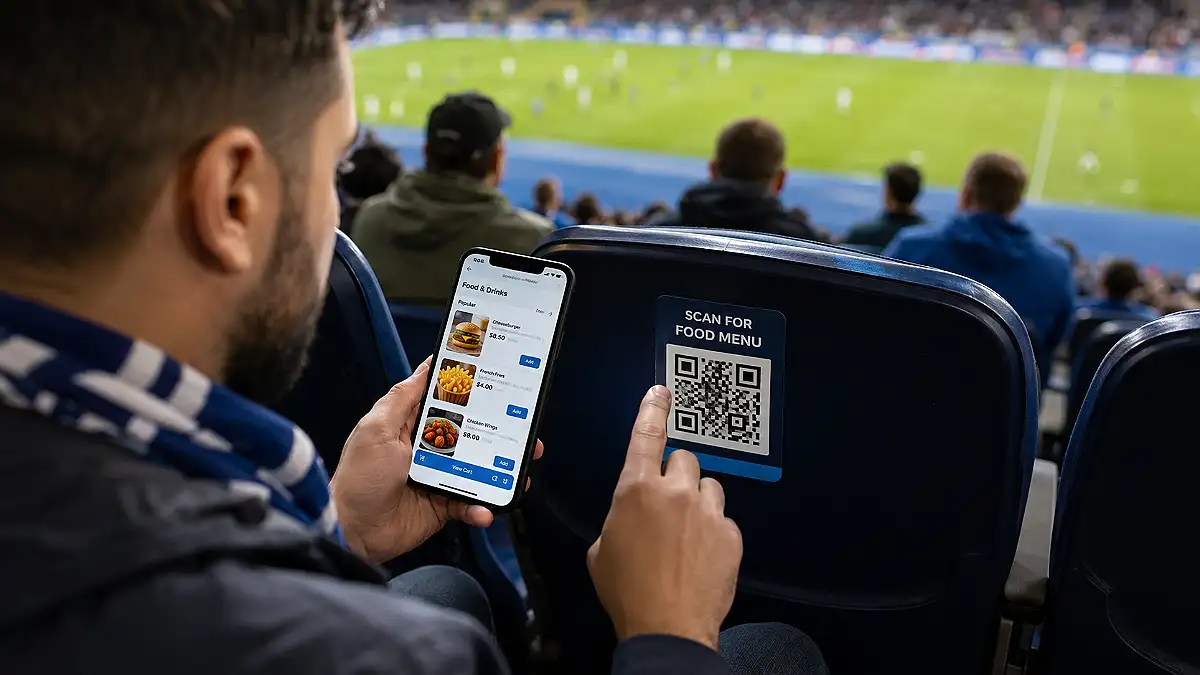
Alternatively, the concession stand may display a static or dynamic QR code on a screen facing the customer. The fan uses their smartphone camera or digital wallet app to scan the code, reviews the transaction amount on their own device, and taps 'Confirm' to authorize the payment. This setup drastically reduces the hardware costs for temporary pop-up merch stalls outside the stadium, as the vendor only needs a display screen or even a printed QR code linked to their merchant account.
Integration with Official World Cup Apps
Recent World Cups have integrated payment capabilities directly into the mandatory fan applications. For example, during the tournament, fans could link their major credit cards (often restricted to official sponsors like Visa) directly into the tournament's official app.
This integration allows for the creation of a 'closed-loop' or tightly controlled 'open-loop' payment environment. When a fan buys a hot dog, they generate a payment QR code right next to their digital ticket in the app. This centralization means fans don't have to juggle multiple apps or physical cards. Everything they need for the matchday—entry, navigation, and purchasing power—is consolidated behind a single scannable interface.
Speeding Up Concessions: The Revenue Impact
For stadium operators, the adoption of QR and barcode payments is not just a convenience; it is a massive revenue driver. The logic is simple: the faster a line moves, the more transactions can be completed during the strict 15-minute halftime window. Studies in stadium economics show that cashless transactions can increase overall food and beverage revenue by 15% to 30%.
When fans know they won't be stuck in a slow-moving cash line, they are more likely to make impulse purchases. Furthermore, the psychological friction of spending is reduced when paying digitally via a quick QR scan compared to physically handing over high-denomination banknotes. The seamless 'scan and go' nature of QR payments ensures that concession stands maximize their throughput precisely when demand peaks.
International Fans and Multi-Currency Solutions
One of the hidden superpowers of QR-based digital wallets at the World Cup is automatic currency conversion. When a fan from Japan buys a jersey in a stadium in the Middle East or Europe, they don't need to visit a currency exchange booth beforehand.
They simply scan the vendor's QR code. The payment gateway automatically calculates the real-time exchange rate, charges the fan in their home currency (or the tournament's base currency), and settles the transaction with the merchant in the local tender. This frictionless cross-border commerce removes a major anxiety point for traveling fans, allowing them to participate in the local matchday economy effortlessly.
Conclusion
The era of counting coins at the concession stand is officially over. By leveraging the universal accessibility and speed of QR code and barcode payments, World Cup stadiums have engineered a frictionless commerce environment. This cashless revolution allows fans to spend less time standing in lines and more time watching the game, all while providing organizers with secure, rapid, and highly profitable operations.
If your business is looking to streamline customer interactions or enable quick digital access to payment portals, generating reliable codes is the first step. Try the free QRinsec generator to create tailored QR codes for your retail or event needs.
Frequently Asked Questions (FAQ)
Are World Cup stadiums entirely cashless now?
Most modern World Cup stadiums operate on a 100% cashless basis for internal concessions and merchandise to ensure speed and hygiene, accepting card tap, NFC, and QR code wallet payments.
What if I only brought physical cash to the stadium?
Cashless stadiums typically provide 'reverse ATMs.' Fans can insert physical cash into these machines, which instantly issue a prepaid physical card or a printable QR code receipt that can be used at concession stands.
Is scanning a QR code to pay secure?
Yes. Modern payment QR codes are heavily encrypted and tokenized. The code does not contain your actual bank details; instead, it contains a secure reference token that safely bridges the transaction between the merchant and the bank.
Can I use my local mobile payment app at an international World Cup?
It depends on the app and the official payment sponsor of the tournament. However, many global payment gateways allow standard digital wallets to generate universally accepted EMV QR codes for cross-border transactions.